
STEP 01
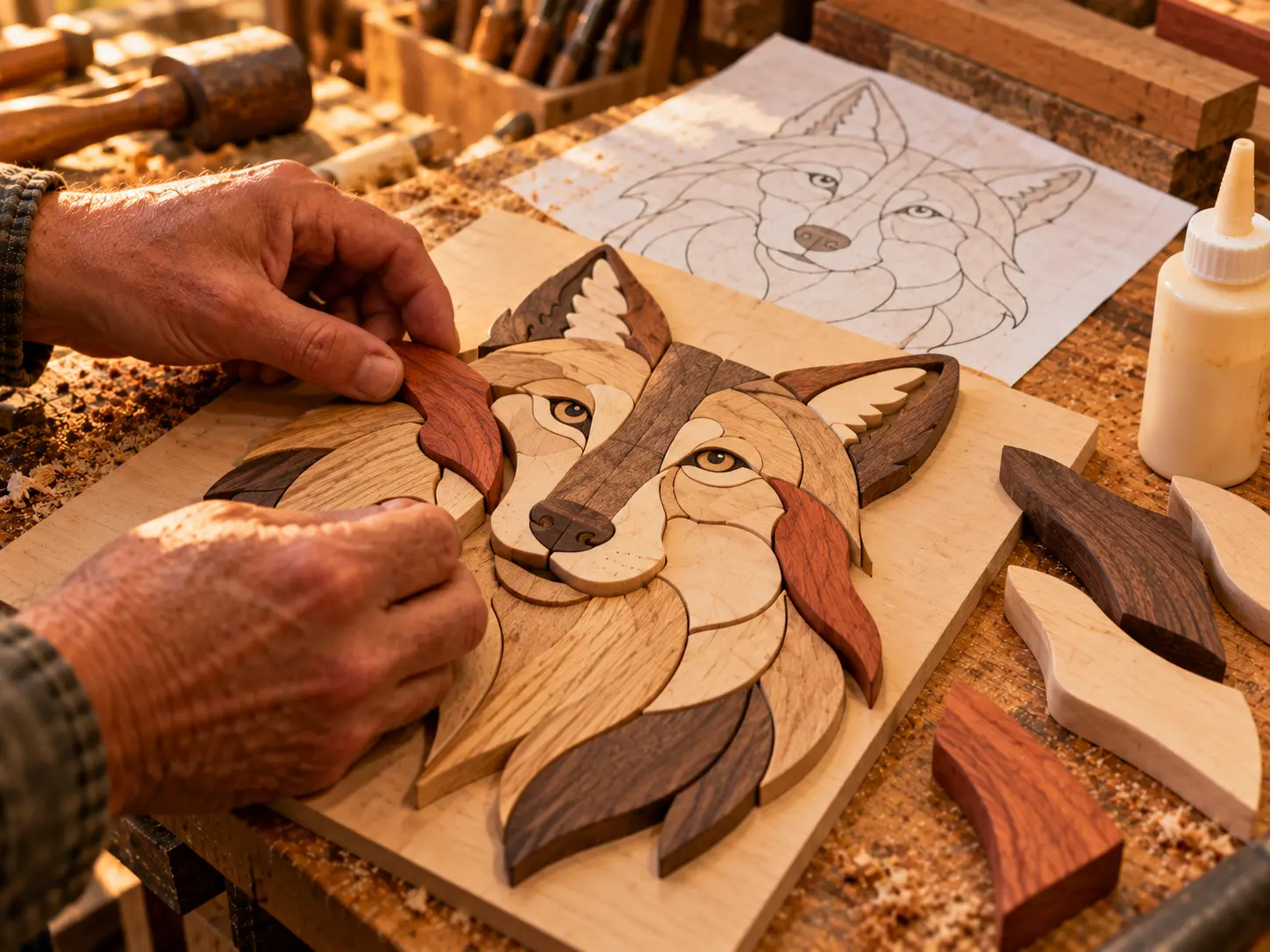
Choose an Intarsia Pattern
Start with a design that matches your interests, experience and available tools.
What Is Intarsia? Intarsia is a woodworking technique where separate pieces of wood are cut, shaped and fitted together to create a dimensional picture or design using the natural colour, grain and character of wood. An intarsia pattern acts as the cutting and assembly guide for those individual pieces.
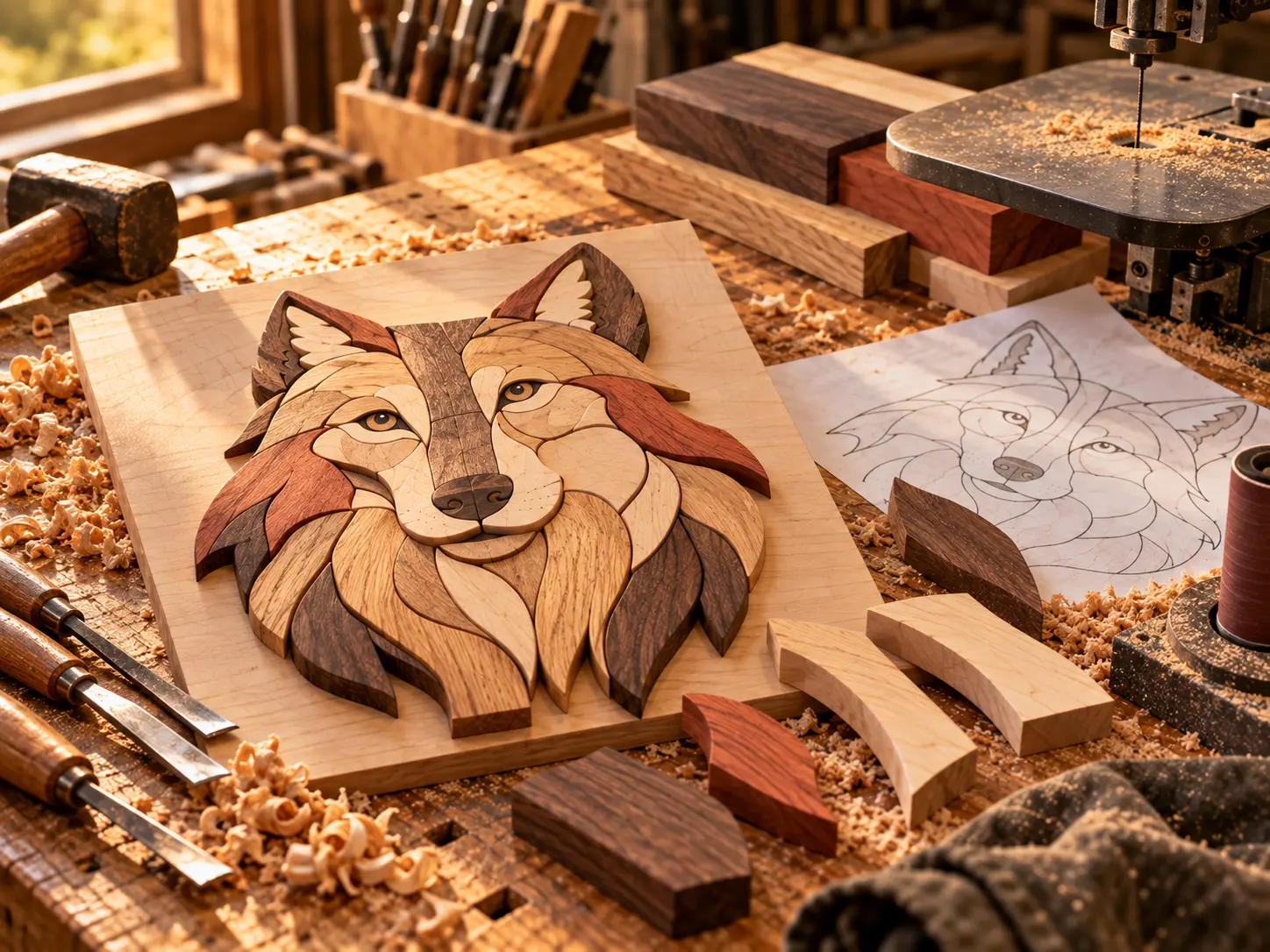
When someone asks what is intarsia, the simplest answer is that it is a form of decorative woodworking in which individual pieces of wood are cut to shape and assembled together to create a picture with depth. Each intarsia pattern separates the overall image into individual pieces that can be prepared, cut, shaped and fitted together.
Each section of an intarsia pattern represents a separate piece. A woodworker transfers or attaches the pattern to the selected wood, cuts the shape, sands and contours the piece, and then fits it together with the other sections.
One of the defining characteristics of intarsia is that natural wood colour and grain can become part of the design. Instead of depending entirely on paint, the maker can select contrasting woods and orient the grain to help create detail, movement and visual depth.
Intarsia projects can range from relatively simple beginner-friendly designs to detailed artwork containing many individual pieces.
Understanding what is intarsia becomes easier when you see the workflow from pattern to finished wood art. The exact sequence can vary by project, but most intarsia work follows the same basic stages shown below.
Start with a design that matches your interests, experience and available tools.
Choose woods based on colour, grain direction, thickness and the visual effect you want.
Individual pattern sections are commonly cut using a scroll saw for controlled curved and detailed cuts.
The pieces are sanded, shaped, fitted and assembled to form the final dimensional artwork.
Tool choice varies depending on the project and the woodworker's preferred workflow, but several tools are commonly associated with intarsia work. A good intarsia pattern can guide the shapes, while accurate cutting and controlled sanding help turn those printed sections into fitted wooden pieces.
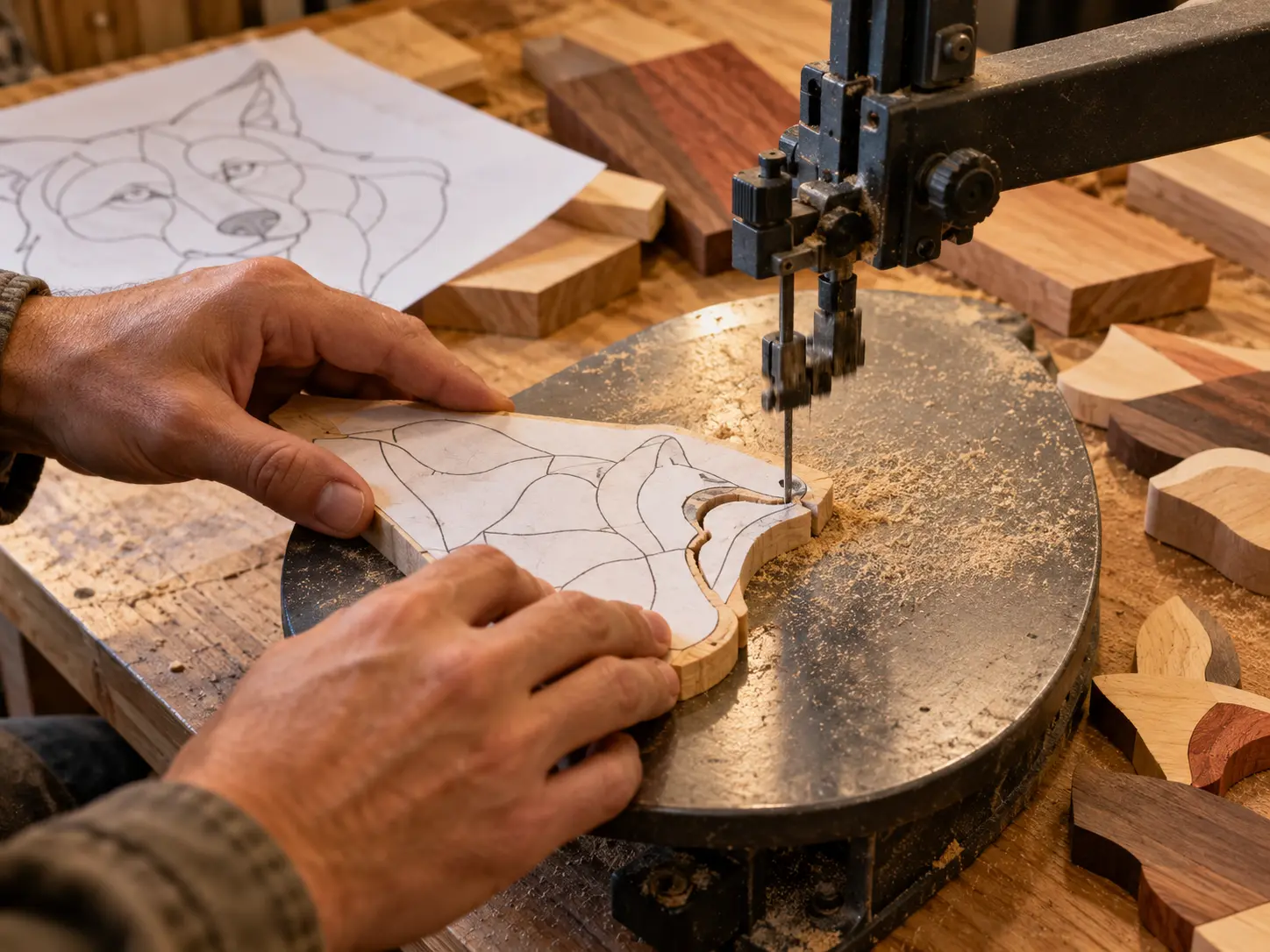 Cutting
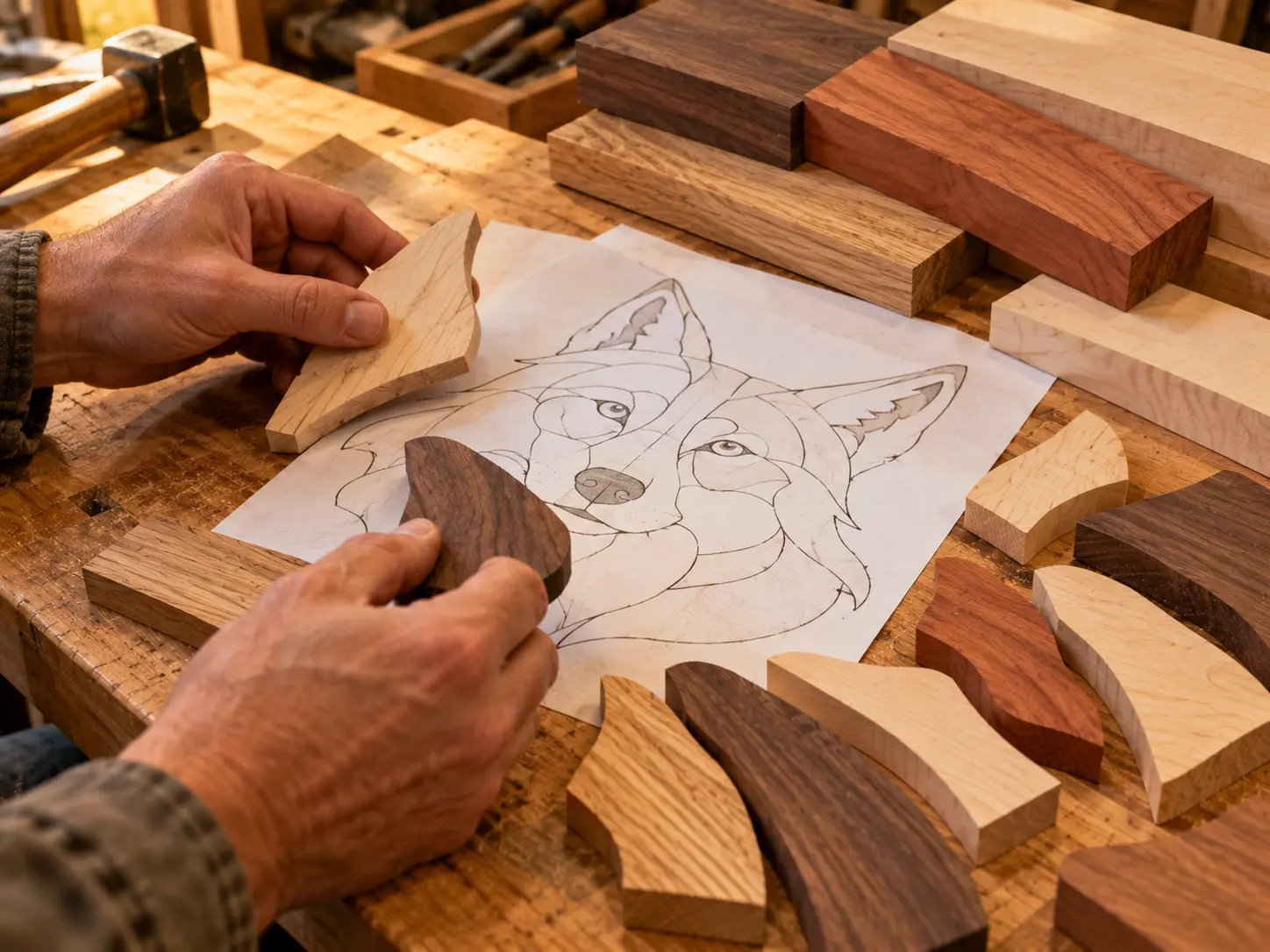 Wood Selection
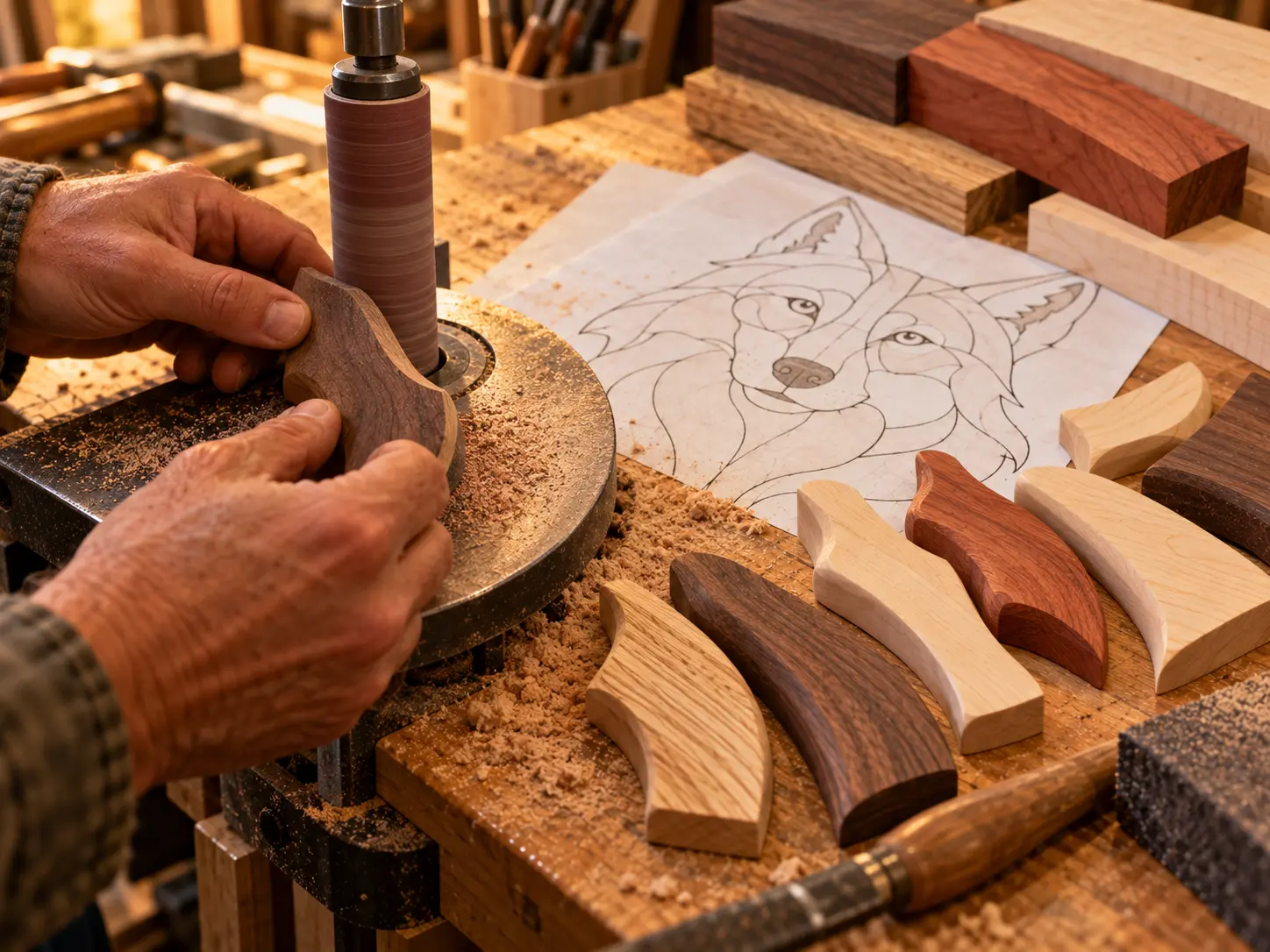 Shaping
 Assembly
Wood selection is one of the clearest ways to understand what is intarsia and why the craft looks different from a flat printed design. Colour and grain can become visual elements of the artwork. The maker can use those natural differences to support the intarsia pattern.
A maker may select lighter and darker woods to separate different parts of an image. Grain direction can also be positioned to suggest movement, fur, feathers, water, leaves or other natural textures.
The finished appearance depends not only on the intarsia pattern itself, but also on cutting accuracy, shaping, sanding, fitting, wood choice and finishing technique.
For a beginner, intarsia is best learned with a simple intarsia pattern that has fewer pieces, manageable curves and clear areas of wood contrast. The aim is to practise accurate cutting, fitting and shaping before moving to more detailed designs.
A pattern with fewer individual sections is generally easier to organise, cut and assemble when you're learning.
Smooth shapes can be easier to follow with a scroll saw than highly detailed sections with tight turns.
Learning to make pieces fit cleanly is more useful than beginning with a project that is too complicated.
Cutting, sanding, shaping and grain selection all improve with practice. Move into more detailed projects gradually.
What is intarsia in practical terms? It is the process of using an intarsia pattern to divide an image into separate wooden parts, choosing wood for colour and grain, cutting each piece, shaping the surfaces and fitting the sections together into dimensional art.
The pattern provides the structure, but the final character comes from the maker's wood choices, grain direction, cutting accuracy, shaping and finishing. That combination of pattern planning and natural wood is what gives intarsia its distinctive appearance.
If you want to try the craft yourself, read our Intarsia for Beginners guide or browse digital intarsia patterns for a project suited to your current experience.
Explore digital intarsia pattern designs for scroll saw woodworking, from beginner-friendly projects to more detailed builds.