 Sale
Great Horned Owl Intarsia Pattern
Original price was: $20.00.$9.99Current price is: $9.99.
Great Horned Owl Intarsia Pattern with a 50-page guide to wood selection, scroll saw cutting, feather shaping, assembly and finishing.
Digital ProductNo physical shipping
Secure CheckoutProcessed by WooCommerce
Workshop ReadyReview product details below
Pattern details
Project Specifications
Key details taken directly from this product's WooCommerce attributes.
Skill Level
Beginners
Product Type
Digital Woodworking Pattern & Beginner Guide
About this pattern
Pattern Description
Read the complete product information before purchasing.
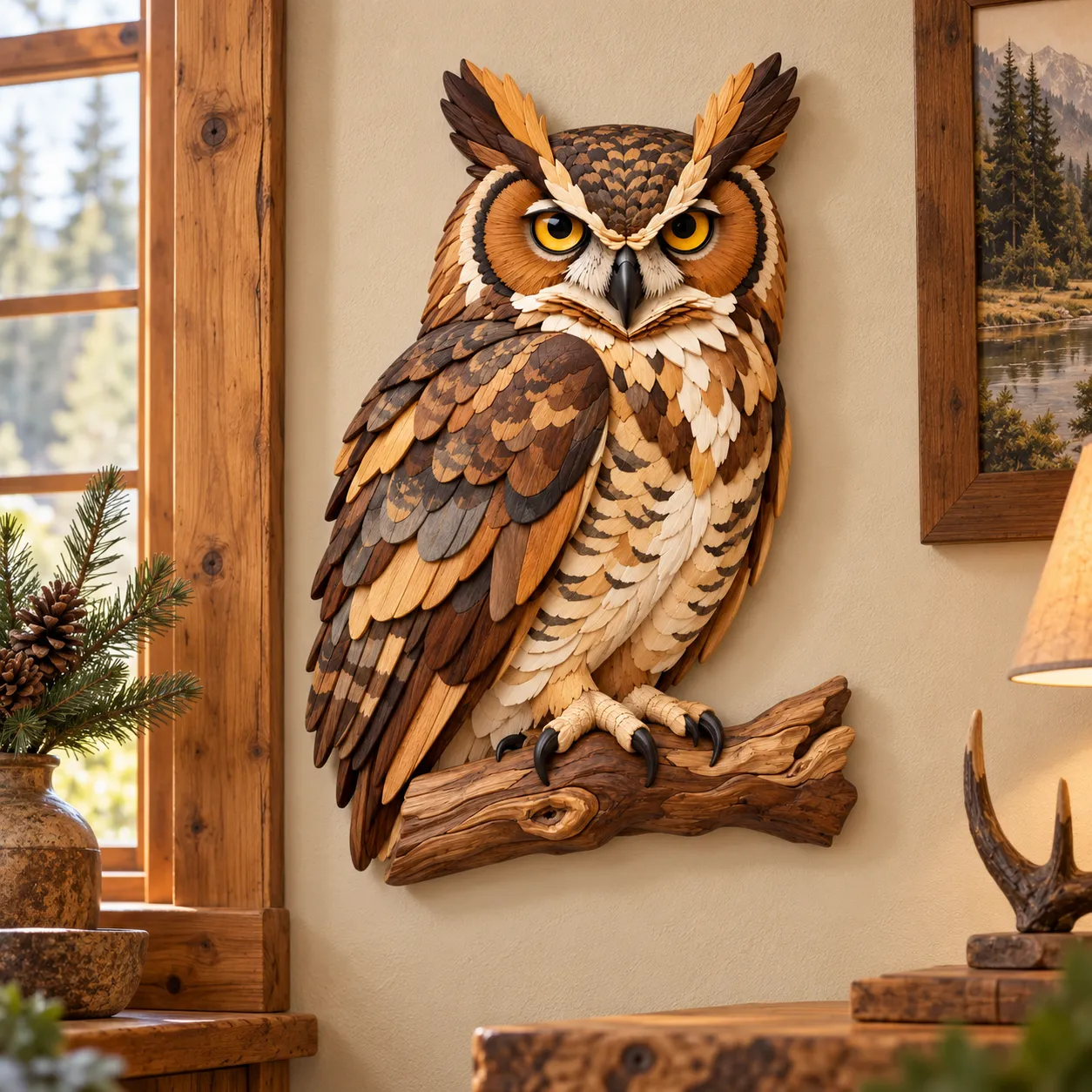
Bring the beauty of woodland wildlife into your workshop with the Great Horned Owl Intarsia Pattern. This detailed woodworking design features a magnificent owl resting on a natural wooden branch, with striking golden eyes, beautifully layered feathers, and distinctive pointed ear tufts.
The finished artwork combines warm brown, amber, cream, tan, and dark wood tones to create a realistic bird portrait. Carefully shaped wooden pieces form the owl’s feathers, facial features, wings, chest, and powerful talons.
Whether you enjoy scroll saw woodworking, bird-inspired projects, or creating handmade wall decorations, this design offers an opportunity to turn individual pieces of wood into dimensional wildlife art.
The accompanying 50-page beginner build guide explains wood selection, pattern scaling, cutting, shaping, feather layering, assembly, finishing, and hanging.
New to this craft? Explore our Intarsia for Beginners guide to understand the essential woodworking techniques before starting.
Great Horned Owl Intarsia Pattern for Wildlife Woodworking
This owl design captures the powerful appearance of a Great Horned Owl through its symmetrical golden eyes, expressive brow feathers, pointed ear tufts, and richly patterned body.
The recommended master size is approximately 18 inches wide by 24 inches high (45.7 × 61 cm), including the branch.
The tall composition is suitable for rustic wall decorations, woodland-inspired rooms, wildlife-themed interiors, and cabin décor.
The left wing features overlapping brown, amber, and gray-brown feathers. Lighter chest feathers contrast with the darker wing and head, while the textured wooden branch creates a natural-looking base.
Unlike a flat silhouette, this intarsia pattern uses raised and shaped components to create dimension, depth, and realistic shadows.
Its detailed appearance makes it a rewarding project for woodworkers who enjoy precise cutting and careful craftsmanship.
What Makes the Great Horned Owl Intarsia Pattern Special?
One of the most distinctive elements is the owl’s expressive face.
The two golden eyes sit within circular facial disks surrounded by cream, tan, and dark brown wooden details.
Bold eyebrow feathers help create the bird’s characteristic intense expression.
The pointed ear tufts extend upward, giving the head its recognizable shape.
The layered wing provides another important feature. Larger feathers form the rear structure, while smaller sections create overlapping rows and natural surface variation.
The branch and curved talons complete the composition, making the owl appear securely perched.
These details give the finished design a realistic appearance and make it an attractive piece of wooden wildlife wall art.
Choosing Wood for Your Owl Intarsia Project
Selecting suitable wood is an important part of building this Great Horned Owl Intarsia Pattern.
Different wood species and grain patterns help separate the owl’s feathers, facial markings, and body sections.
Pale maple, holly, aspen, or basswood can provide light cream tones around the face and chest.
Cherry, alder, beech, or other medium-toned hardwoods can create warm amber and tan feather sections.
Walnut and darker brown woods work well for shadows, wing details, and the branch.
Golden-toned woods or carefully selected color treatments can highlight the owl’s striking irises, while very dark wood provides contrast for the pupils and beak.
Exact wood species are flexible. The most important goal is to preserve a clear difference between light, medium, and dark pieces.
Understanding how wood colors and textures contribute to the finished picture is an essential part of intarsia woodworking.
Wood Grain Direction and Feather Appearance
Wood grain direction influences both the appearance and strength of individual pieces.
For the wing feathers, grain should generally flow from the feather root toward the tip.
The chest feathers benefit from a downward grain direction, while the grain around the facial disks can follow the rounded eye structure.
The pointed ear tufts require particular attention because grain running across narrow tips may increase the risk of breakage.
Careful wood selection helps create a more natural owl portrait while supporting delicate parts during cutting and shaping.
Scroll Saw Cutting and Dimensional Feather Shaping
A scroll saw is the primary tool for preparing the wooden components.
The project involves larger structural pieces as well as smaller details around the face, feather tips, eyes, and talons.
The beginner guide discusses blade choices for different shapes and wood thicknesses.
Larger sections may be cut with suitable #5–#7 reverse-tooth blades, while smaller feather details may benefit from finer blades.
Always select blades according to your saw, wood species, thickness, and the blade manufacturer’s guidance.
Cutting Great Horned Owl Intarsia Pattern Details Accurately
Start by organizing the project into manageable sections.
The main construction areas include the branch, body, wing, chest, head, facial disks, eyes, beak, and feet.
Cut the larger, more stable components first to establish the overall shape.
Keep small pieces labeled and organized as you work.
Before gluing, arrange the pieces together without adhesive. This process, called dry fitting, helps identify gaps and alignment problems early.
For additional woodworking guidance, browse our Intarsia Patterns Shop and beginner resources.
Creating Realistic Feather Layers
Feather shaping gives the owl its dimensional appearance.
Each feather should have a smooth visible surface, a defined root, and a carefully tapered tip.
The larger rear feathers can remain slightly lower, while selected front feathers receive additional height.
This creates subtle shadows and helps individual sections remain visible.
Avoid excessive sanding around joining edges because it may create unwanted gaps between neighboring pieces.
Work gradually, checking the fit after each major shaping stage.
A Detailed 50-Page Beginner Build Guide
The accompanying guide explains the construction process from initial preparation to final display.
It covers recommended tools, material thickness, wood colors, grain direction, proportional resizing, scroll saw techniques, feather shaping, and assembly.
The guide also explains how to build the face and align the golden eyes for a balanced expression.
Additional instructions cover preparing the branch, shaping the feet and talons, correcting gaps, creating dimensional relief, and attaching the artwork to a supporting backer.
The recommended master size can be adjusted using the scaling guidance. All dimensions must be increased or reduced uniformly to preserve the owl’s proportions.
Finishing instructions discuss sanding, applying thin coats, maintaining natural wood contrast, and choosing suitable hanging hardware.
The explanations are beginner-oriented, although the numerous feather details and delicate components require time, patience, and careful tool handling.
Great Horned Owl Intarsia Pattern for Rustic Wall Décor
The completed owl can become an impressive focal point in a living room, study, hallway, cabin, or nature-themed interior.
Warm natural wood colors complement rustic furniture, neutral walls, woodland decorations, and traditional home furnishings.
Its raised feathers and detailed facial features create an attractive display from different viewing angles.
The design may also appeal to bird enthusiasts, wildlife lovers, and makers who enjoy creating meaningful handmade gifts.
Each finished piece can look slightly different depending on the wood species, grain patterns, and finishing choices.
Digital Product Information
This is a digital woodworking resource, not a finished wooden owl or physical decoration.
The accompanying 50-page PDF provides project guidance, reference images, material recommendations, sizing instructions, construction diagrams, and finishing information.
Wood, tools, glue, and other physical materials are not included.
Please read the Digital Product License for information about using the downloadable materials.
Start Your Great Horned Owl Intarsia Pattern Project
Create a beautiful woodland-inspired woodworking project featuring golden eyes, dramatic ear tufts, layered feathers, and a natural wooden branch.
The Great Horned Owl Intarsia Pattern combines detailed wildlife design with practical woodworking guidance, making it an engaging project for patient beginners and experienced makers alike.
Explore more digital intarsia patterns from IntarsiaPattern and discover your next creative woodworking project.
Simple purchase flow
From Pattern to Workshop
01
Choose Your Pattern
Review the product details, images and specifications.
02
Checkout Securely
Use the Card or PayPal purchase button to open the secure checkout for this pattern.
03
Access Your Purchase
Follow the instructions shown after successful payment to access your digital purchase.
04
Start Creating
Prepare your wood and begin your intarsia project.