 Sale
Flying Bald Eagle Intarsia Pattern
Original price was: $20.00.$9.99Current price is: $9.99.
Flying Bald Eagle Intarsia Pattern with a 48-page woodworking guide. Learn scroll saw cutting, feather shaping, assembly and finishing.
Digital ProductNo physical shipping
Secure CheckoutProcessed by WooCommerce
Workshop ReadyReview product details below
Pattern details
Project Specifications
Key details taken directly from this product's WooCommerce attributes.
Skill Level
Beginners
About this pattern
Pattern Description
Read the complete product information before purchasing.
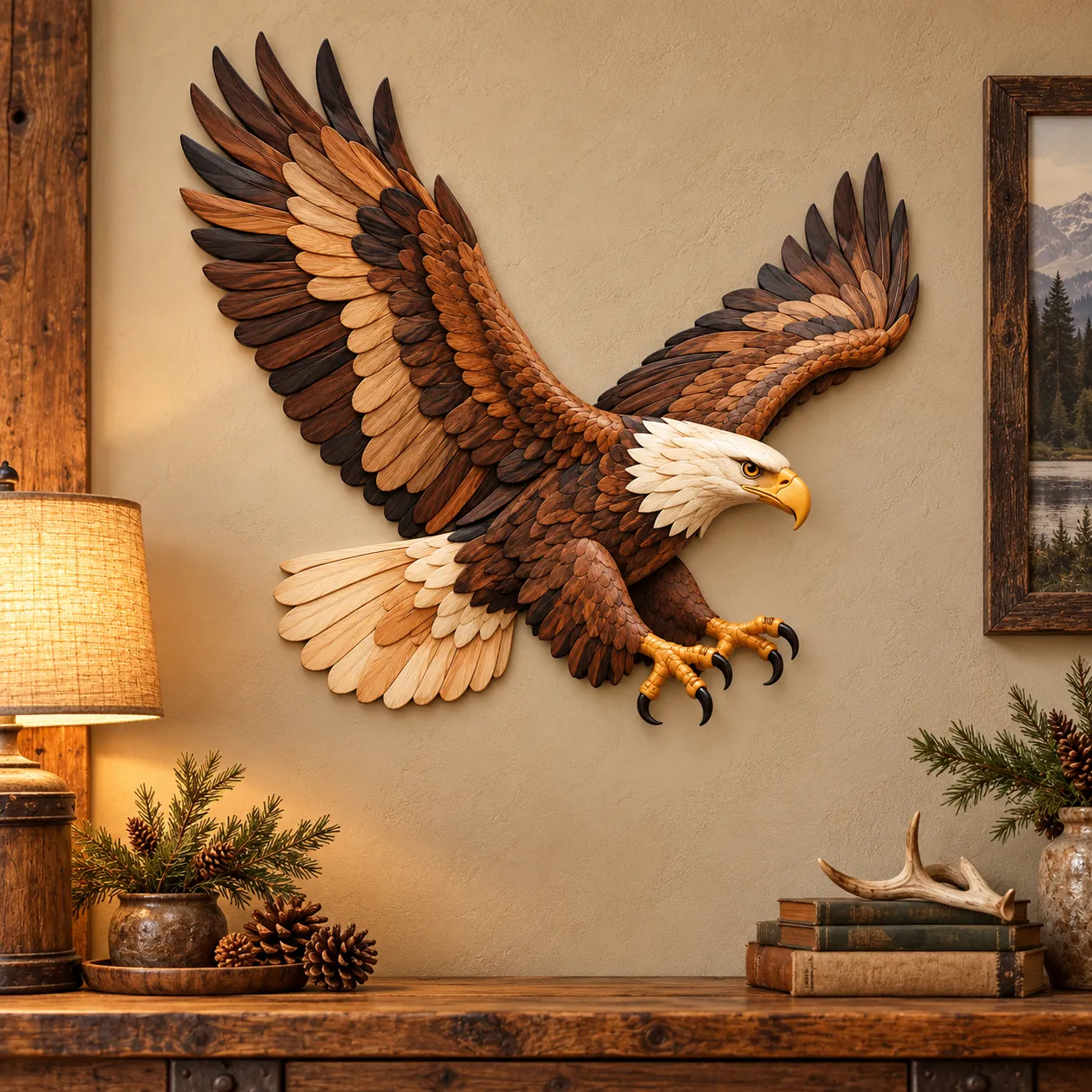
Bring the power, beauty, and freedom of the American bald eagle into your woodworking projects with this Flying Bald Eagle Intarsia Pattern. Featuring a majestic eagle soaring through the air with its wings fully extended, this detailed digital woodworking design captures the impressive movement of one of North America’s most recognizable birds.
The design features beautifully layered brown feathers, a distinctive white head, a bright golden beak, a flowing white tail, and powerful talons reaching forward. Carefully arranged wood tones create natural contrast, while individual feather shapes add realistic depth and movement.
Whether you enjoy scroll saw woodworking, wildlife-inspired art, or dimensional wooden wall decorations, this intarsia pattern offers a rewarding creative project.
The accompanying 48-page beginner build guide explains the process from wood selection and pattern preparation to cutting, shaping, assembly, finishing, and hanging.
New to this technique? Explore our Intarsia for Beginners guide to understand the essential woodworking skills before starting.
Flying Bald Eagle Intarsia Pattern for Wildlife Woodworking
The recommended master size is approximately 24 inches wide by 18 inches high (61 × 45.7 cm).
This size provides enough room to shape the long wing feathers, detailed head, curved beak, white tail, and delicate claws while keeping the finished project suitable for wall display.
The guide also explains how to resize the entire design proportionally.
For example, an 18-inch-wide eagle uses 75% of the original scale. Larger versions can create impressive statement pieces for cabins, living rooms, offices, workshops, and wildlife-themed interiors.
The wide flying silhouette makes the finished eagle an eye-catching centerpiece, while the individual wooden feathers add detail that can be appreciated up close.
What Makes This Flying Bald Eagle Intarsia Pattern Special?
Unlike a simple flat scroll saw silhouette, this project uses multiple wooden components to create dimensional artwork.
The large rising wing features layers of feathers in dark brown, medium brown, and lighter tan. The opposite wing curves upward, providing movement and balance.
The eagle’s white head stands out against its warm brown body, while the hooked golden beak and focused eye give the bird its recognizable expression.
The long white tail feathers create additional contrast, and the forward-reaching talons complete the powerful flying pose.
Carefully shaping the wooden pieces at different heights helps make the wings, head, body, and claws appear more lifelike.
Wood Selection and Natural Color Combinations
Choosing suitable wood species is an important part of creating realistic intarsia artwork.
For the eagle’s wings and body, the guide recommends combining several natural brown shades.
Cherry, walnut, mahogany, sapele, alder, pearwood, and cedar are possible choices depending on the desired color and grain.
Lighter woods such as holly, hard maple, aspen, or basswood can create contrast for the white head and tail.
Yellowheart or osage orange may be used for the golden beak and feet. Alternatively, suitable pale wood can be carefully colored after shaping.
Dark walnut or another very dark hardwood can highlight the eyes and claws.
The goal is not to use one specific combination of species. It is to preserve the contrast between light feathers, warm brown sections, dark wing shadows, and golden facial details.
Grain Direction and Feather Details
Wood grain can help emphasize the natural movement of the eagle.
Long wing feathers look more convincing when the grain follows their length, moving from the root toward the tip.
The head grain should complement the direction of the crown and beak. The body grain should support the sweeping movement toward the tail.
Straight, stable grain is particularly helpful for narrow feathers and fragile toe pieces.
Learn more about dimensional wooden artwork in our What Is Intarsia guide.
Flying Bald Eagle Intarsia Pattern Cutting and Shaping
A scroll saw is the primary tool used to cut the individual wooden components.
The beginner guide organizes the project into six construction modules: left wing, right wing, body and shoulders, head and beak, tail, and legs and talons.
This approach helps make a complex-looking design easier to manage.
Rather than cutting all the smallest details first, woodworkers can begin with larger, more stable pieces.
The guide then explains how to prepare the wing feathers, shape the head, create the tail, and assemble the smaller details.
Cutting the Flying Bald Eagle Intarsia Pattern Accurately
Accurate cutting is especially important where individual feathers meet.
For general cutting, the guide discusses #3, #5, and #7 style scroll saw blades, depending on wood thickness and the type of cut.
Smaller blades may be more suitable for tight curves around the eye, beak, and delicate feather tips.
After cutting, dry fitting helps identify gaps and alignment problems before the shaping process begins.
The guide also explains how to round the feather surfaces while keeping the roots strong and gently tapering the tips.
For additional advice, visit our Best Scroll Saw Blades for Intarsia guide.
A Detailed 48-Page Beginner Build Guide
The accompanying guide provides structured explanations for completing the woodworking project.
It covers selecting suitable wood, understanding grain direction, planning the finished dimensions, preparing cutting templates, labeling individual parts, setting up the scroll saw, and cutting safely.
Additional sections explain how to build the wings, fit the body, shape the white head, form the hooked beak, construct the tail, and prepare the talons.
The guide also includes construction diagrams, sizing information, sanding recommendations, and a suggested assembly sequence.
For the recommended 24-inch-wide project, it discusses using a suitable plywood backing board to support the completed wooden artwork.
Finishing options include satin wiping varnish, hardwax oil, shellac, and water-based polyurethane, depending on the desired appearance.
A troubleshooting section addresses common challenges such as visible gaps, broken talons, uneven feathers, and finishing problems.
Although the instructions are beginner-oriented, the numerous feather sections and delicate details make this a patient, detail-focused woodworking project.
Create Impressive Flying Eagle Wall Art
The finished design can become an attractive feature in a rustic cabin, home office, workshop, living room, or wildlife-themed space.
Its natural wooden appearance pairs beautifully with warm interior colors, stone fireplaces, wooden furniture, and traditional décor.
For bird lovers and woodworking enthusiasts, the design also provides inspiration for meaningful handmade gifts.
Because every piece of wood has its own grain, color, and character, each finished eagle can look slightly different.
This makes the project especially appealing to makers who enjoy creating personalized wooden artwork.
Digital Woodworking Product Information
This product is a digital woodworking resource, not a completed wooden eagle.
The 48-page guide provides construction instructions, diagrams, sizing recommendations, wood-selection advice, and assembly guidance. Cutting outlines should be taken from the corresponding pattern sheets supplied in the complete download package.
Physical wood, tools, adhesive, hanging hardware, and finished artwork are not included.
Please review the Digital Product License for the applicable usage conditions.
Start Your Flying Bald Eagle Intarsia Pattern Project
Transform individual pieces of wood into a dramatic flying eagle with layered feathers, natural colors, and dimensional detail.
The Flying Bald Eagle Intarsia Pattern offers an engaging opportunity to practice accurate scroll saw cutting, careful fitting, feather shaping, and detailed woodworking assembly.
Whether you’re creating artwork for your home or planning a special handmade gift, this distinctive wildlife design can become a memorable woodworking project.
Explore more original digital intarsia patterns at IntarsiaPattern and discover birds, animals, wildlife, seasonal decorations, and nature-inspired designs for your next project.
Simple purchase flow
From Pattern to Workshop
01
Choose Your Pattern
Review the product details, images and specifications.
02
Checkout Securely
Use the Card or PayPal purchase button to open the secure checkout for this pattern.
03
Access Your Purchase
Follow the instructions shown after successful payment to access your digital purchase.
04
Start Creating
Prepare your wood and begin your intarsia project.