 Sale
Great Blue Heron Intarsia Pattern | Scroll Saw PDF
Original price was: $20.00.$9.99Current price is: $9.99.
Great Blue Heron Intarsia Pattern with a 48-page beginner guide covering scroll saw cutting, wood selection, feather shaping, assembly and finishing.
Digital ProductNo physical shipping
Secure CheckoutProcessed by WooCommerce
Workshop ReadyReview product details below
Pattern details
Project Specifications
Key details taken directly from this product's WooCommerce attributes.
Skill Level
Beginners
Product Type
Digital Woodworking Pattern & Guide
About this pattern
Pattern Description
Read the complete product information before purchasing.
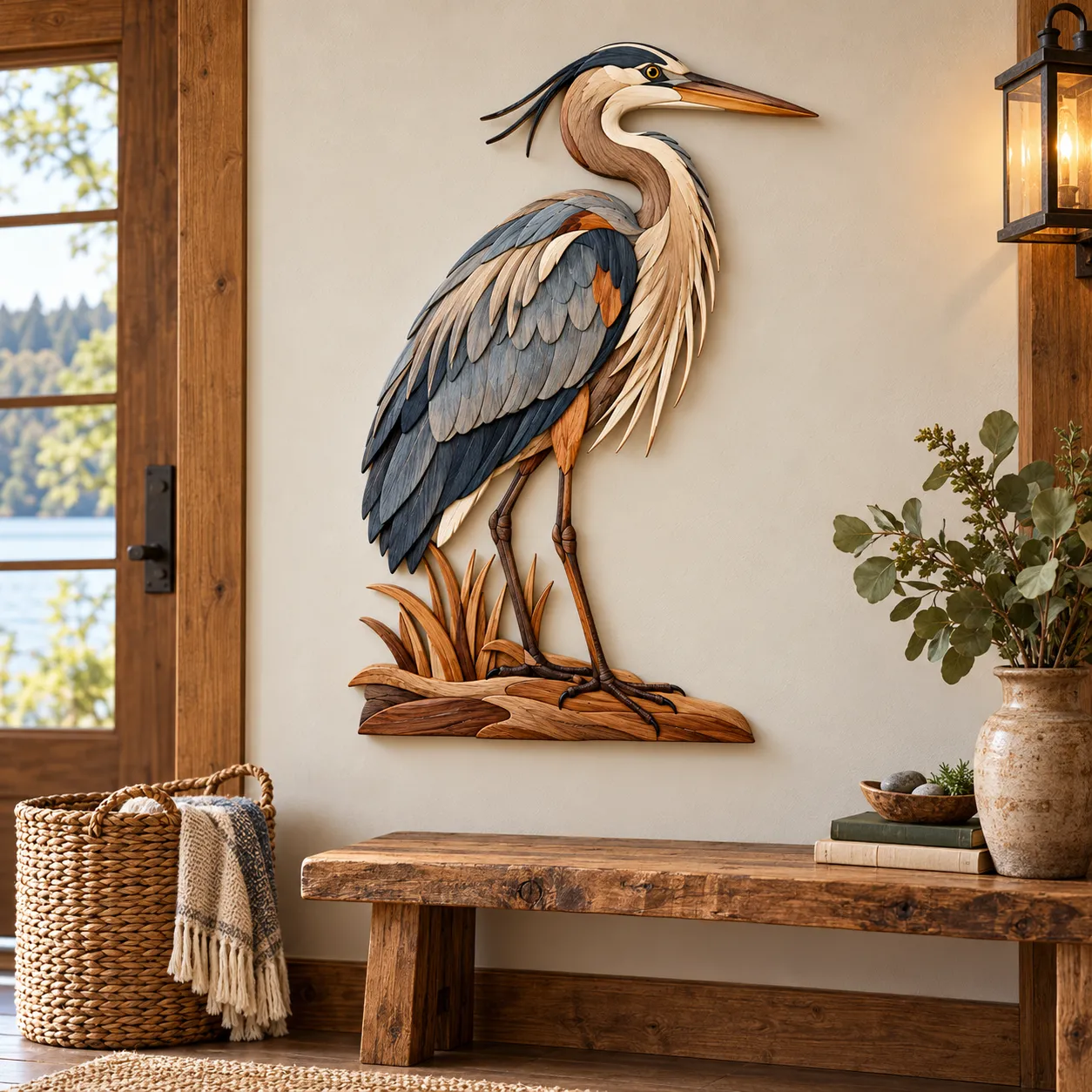
Bring the quiet beauty of wetland wildlife into your woodworking projects with this Great Blue Heron Intarsia Pattern. Featuring an elegant heron standing on a natural wooden base surrounded by marsh grass, this detailed digital woodworking design captures the bird’s graceful posture, distinctive long neck, and beautifully layered feathers.
The design combines blue-gray wings, warm brown accents, a cream-colored neck, a long golden-orange beak, and dark slender legs. Carefully selected wood colors create realistic contrast, while dimensional shaping gives the finished artwork depth and character.
Whether you enjoy scroll saw woodworking, bird-inspired art, or handmade home decorations, this intarsia pattern offers a creative opportunity to build a striking piece of wooden wildlife art.
The accompanying 48-page beginner build guide explains material selection, resizing, wood grain direction, scroll saw cutting, feather shaping, assembly, finishing, and hanging.
If you are new to this woodworking technique, start with our Intarsia for Beginners guide to learn the essential skills.
Great Blue Heron Intarsia Pattern for Bird Lovers and Woodworkers
The recommended finished project measures approximately 16 inches wide by 24 inches high (40.6 × 61 cm), including the heron and its wooden marsh base.
This tall, vertical composition makes the design particularly suitable for narrow wall spaces, entryways, living rooms, lake houses, and coastal-inspired interiors.
The heron’s long, gently curved neck creates an elegant silhouette, while its folded wings provide plenty of opportunities to experiment with different wood colors and textures.
The included guide also explains how to resize the design proportionally.
For example, you can reduce the project to 12 inches high for a smaller decorative piece or enlarge it to 30 inches high for a more prominent wall display.
Resizing the complete design uniformly helps preserve the natural relationship between the head, neck, wings, legs, and base.
What Makes This Great Blue Heron Intarsia Pattern Special?
Unlike a flat wooden silhouette, this design uses individually shaped pieces to create a dimensional appearance.
The heron’s wing consists of overlapping feather sections, arranged in shades of blue-gray, charcoal, cream, and warm brown.
Its S-shaped neck features long, flowing cream-colored plumes, while the pointed beak and distinctive crown feathers add realistic detail.
The long legs connect naturally to the marsh-inspired base, creating a balanced composition.
The contrast between smooth feather surfaces, visible wood grain, and subtle height differences gives the artwork an attractive handcrafted appearance.
This project is ideal for makers who want to improve their wood selection, cutting accuracy, feather shaping, and assembly skills.
Choosing Wood for Realistic Heron Colors
Wood selection plays an important role in the final appearance of this bird intarsia pattern.
For the light-colored neck and chest feathers, consider holly, maple, aspen, basswood, or birch.
Warm brown woods such as cherry, sapele, mahogany, or alder can help create the heron’s neck and smaller body accents.
The blue-gray wing sections can be made from suitable maple, poplar, or ash treated with carefully selected wood dyes or stains.
Darker walnut or charcoal-colored wood can provide contrast for the larger flight feathers and crown.
For the golden-orange beak, yellowheart, osage orange, or appropriately colored maple can create the desired appearance.
The long legs work well in darker brown tones, while oak, walnut, or cherry can be used for the wooden base.
The most important consideration is maintaining a clear difference between light, medium, and dark sections.
Learn how these wood colors work together in our What Is Intarsia woodworking guide.
Grain Direction for Natural Feather Details
Wood grain is more than a decorative feature. It helps make a dimensional woodworking project look realistic.
For the long wing feathers, the grain should generally follow the direction of each feather.
The neck grain should complement the graceful S-shaped curve, while the long beak benefits from grain running toward its tip.
Straight grain is especially important for the slender legs and delicate crest pieces.
Careful grain planning can improve both the visual appearance and structural strength of the finished project.
Cutting and Shaping the Heron with a Scroll Saw
A scroll saw is the primary cutting tool for this woodworking project.
The beginner guide organizes construction into manageable sections, including the head, neck, wing, legs, feet, marsh grass, and wooden base.
Starting with larger components allows you to understand the overall design before working on the more delicate sections.
The main body and base establish the structure, while the wing feathers, neck plumes, and small head details provide additional dimension.
How to Cut the Great Blue Heron Intarsia Pattern Accurately
Begin by preparing and labeling the cutting templates according to your chosen project size.
Choose wood for each section based on color, thickness, and grain direction.
For many main components, the guide discusses using #5 reverse-tooth scroll saw blades. Smaller #3 blades may be useful for medium curves, while finer blades can help with delicate crest feathers, eye details, and small toes.
Blade selection should always match your actual wood thickness and the manufacturer’s recommendations.
After cutting, arrange the pieces without glue to check their fit.
This dry-fitting stage allows you to identify gaps, correct alignment, and make small adjustments before shaping the visible surfaces.
For more practical blade-selection advice, read our Best Scroll Saw Blades for Intarsia guide.
A Detailed 48-Page Beginner Build Guide
The accompanying guide provides a structured explanation of the woodworking process.
It covers choosing the finished size, preparing materials, understanding grain direction, selecting blades, labeling pieces, cutting accurately, shaping feathers, assembling the design, and preparing it for display.
Helpful diagrams explain the heron’s proportions, feather arrangement, head details, leg alignment, and construction sequence.
The guide also discusses how to achieve dimensional relief without removing excessive material.
Additional sections cover sanding, selecting appropriate finishes, preparing a backing board, installing hanging hardware, and correcting common woodworking mistakes.
The instructions are written with beginners in mind, although the delicate feathers, long legs, and detailed shaping reward patience and careful workmanship.
Beautiful Great Blue Heron Wall Art for Nature-Inspired Spaces
The completed Great Blue Heron Intarsia Pattern can become a beautiful decorative feature for many interior styles.
Its blue-gray feathers and natural wooden base complement coastal décor, lake house interiors, rustic cabins, wildlife-themed rooms, and modern homes with neutral colors.
The tall shape is particularly attractive above a narrow console table, beside a window, or in a hallway.
Bird lovers and woodworking enthusiasts may also enjoy creating the design as a thoughtful handmade gift.
Because every board has unique grain patterns, different wood choices can give each completed heron its own individual character.
Digital Product Information
This product is a digital woodworking resource, not a finished wooden bird decoration.
The 48-page guide provides construction instructions, material recommendations, sizing information, diagrams, assembly guidance, and finishing advice.
The woodworking project requires suitable wood, a scroll saw, sanding equipment, adhesive, finishing supplies, and appropriate safety equipment.
Please review our Digital Product License for information about permitted use of the downloaded materials.
Start Your Great Blue Heron Intarsia Pattern Project
Turn individually cut wooden pieces into elegant wildlife artwork with carefully layered feathers, a graceful neck, and realistic natural colors.
The Great Blue Heron Intarsia Pattern is an engaging project for woodworkers who appreciate detailed bird designs and dimensional wooden wall art.
Explore more digital intarsia patterns at IntarsiaPattern and discover animal, wildlife, bird, nature, and seasonal designs for your next creative woodworking project.
Simple purchase flow
From Pattern to Workshop
01
Choose Your Pattern
Review the product details, images and specifications.
02
Checkout Securely
Use the Card or PayPal purchase button to open the secure checkout for this pattern.
03
Access Your Purchase
Follow the instructions shown after successful payment to access your digital purchase.
04
Start Creating
Prepare your wood and begin your intarsia project.