

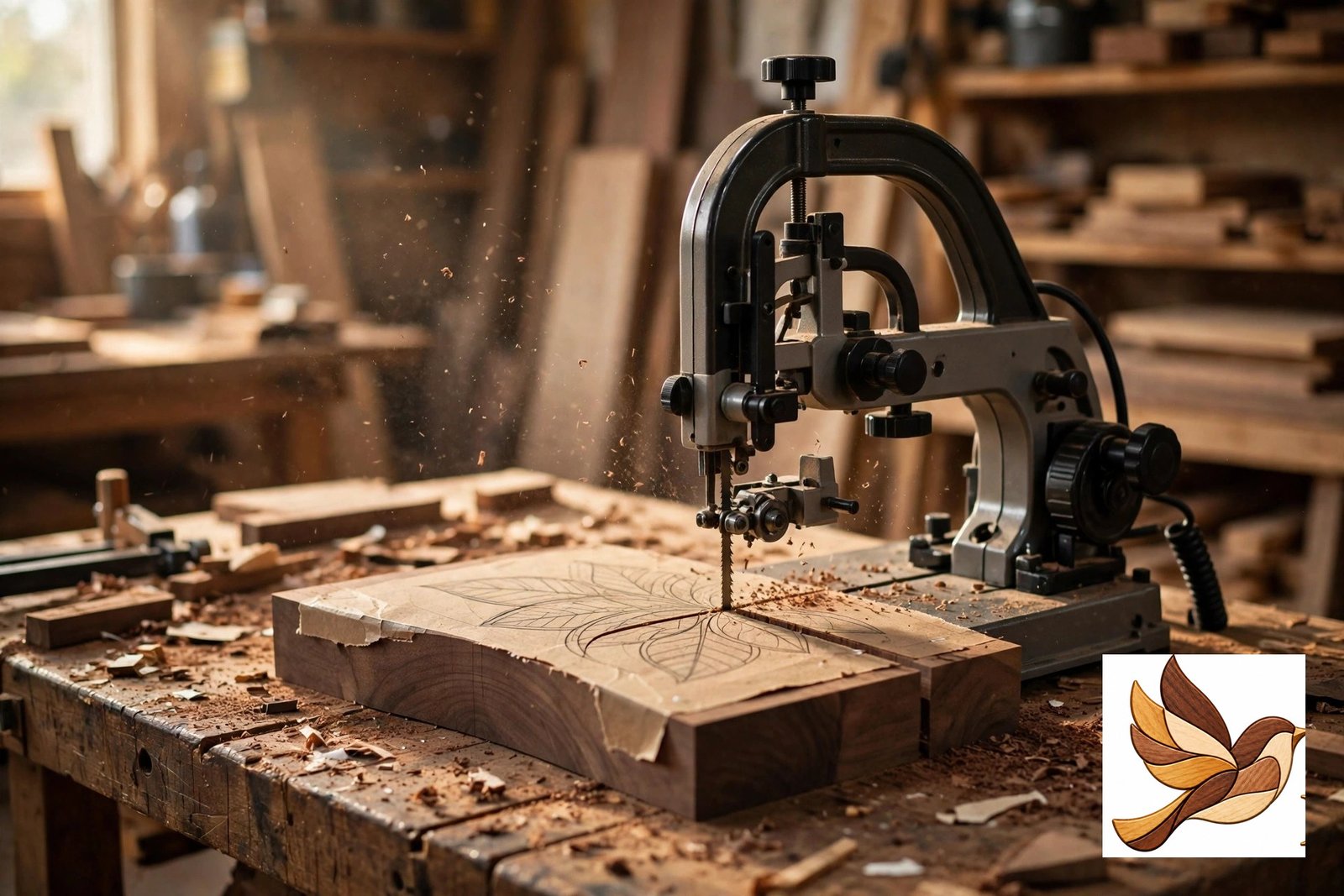
Every intarsia piece you will ever make passes through one machine. The scroll saw decides how tight your curves can be, how clean your inside cuts come out, and — honestly — how much you enjoy the hours at the bench. If you are choosing your first saw, or replacing one that vibrates like a washing machine, this guide explains how to find the best scroll saw for intarsia work: the five features that genuinely matter, the ones you can safely ignore, and what to buy at each budget.
A quick reassurance first: intarsia does not demand the most expensive saw on the market. Finding the best scroll saw for intarsia is about fit, not price. It demands a saw that is smooth, controllable and kind to fine blades. Plenty of beautiful work comes off mid-priced machines. Spend on the features below, not on badges.
What Makes a Scroll Saw Good for Intarsia?
Intarsia cutting is different from general scroll work. You cut many separate pieces, often with tight inside corners, frequent blade changes for pierced cuts, and long sessions where vibration turns into fatigue and mistakes. The best scroll saw for intarsia is the one that handles those three demands: precision, quick blade changes and low vibration. Everything else is secondary.
1. Throat size: how big a piece can you swing?
The throat is the distance from the blade to the back of the saw’s arm — it limits the size of workpiece you can rotate on the table. Common sizes are 16″, 18″, 20″ and 21″. Most intarsia patterns finish between 25 and 45 cm across, and you need throat room to spin the wood, not just fit it:
- 16″ throat: fine for small and medium pieces; you will occasionally fight a large panel.
- 18–20″ throat: the sweet spot for intarsia — handles almost any pattern comfortably.
- 21″+ throat: only worth it if you regularly make large statement pieces.
Throat size is the first thing to check when choosing the best scroll saw for intarsia, because it decides which patterns you can cut at all. If you plan to work from full-size printed patterns, remember our guide to how to read an intarsia pattern — piece size and layout tell you exactly how much swing room your projects need before you buy.
2. Variable speed: the feature intarsia cannot skip
Different woods — and different moments in the same cut — want different blade speeds. Dense bloodwood at full speed scorches and dulls blades; soft pine at full speed grabs and tears. A variable-speed dial (typically 400–1,800 strokes per minute) lets you slow down for tight turns and hard species and speed up for long, soft straights. For intarsia, treat variable speed as non-negotiable — it is one of the defining features of the best scroll saw for intarsia. Single-speed saws are false economy.
3. Blade clamps: pinless is the intarsia standard
Intarsia is full of pierce cuts: drill a small hole inside a section, thread the blade through, cut the shape from the inside. That means changing and re-threading blades constantly. Pinless blade clamps — ideally tool-free, with a quick-release tension lever — turn a two-minute fiddle into ten seconds. Pinned blades are thicker, need bigger entry holes and limit your finest work. Whatever saw you buy, pair it with the right blades: our guide to the best scroll saw blades for intarsia covers sizes, TPI and which blade suits which wood thickness. Quick, tool-free changes are what make the best scroll saw for intarsia pleasant to use day after day.
4. Low vibration and a solid table
Vibration is the silent quality killer — and the reason the best scroll saw for intarsia is worth testing in person before you buy. It blurs your line, fatigues your hands and makes fine pieces jump. Parallel-link arm designs vibrate noticeably less than older C-arm designs, and a heavy cast-iron table absorbs what vibration remains. When you test a saw, run it at several speeds with a coin standing on the table — if the coin walks, so will your workpiece. A table that tilts both ways (or at least a full 45° left) also matters for the bevel cuts used when fitting and raising pieces.
5. Dust blower, light and blade guard
You cannot follow a line you cannot see. A flexible dust blower that actually clears the cut line, a built-in work light, and a hold-down that keeps fingers honest without blocking your view are small features you will appreciate on every single piece. None of them should cost extra — they are standard on any saw worth buying.
What to Buy at Each Budget
Entry level (under $200). Saws like the WEN 3921 class prove the craft is for you. Expect a 16″ throat, variable speed and acceptable vibration on a bolted-down bench. Perfectly capable of your first dozen patterns. At this price, the best scroll saw for intarsia is the one with variable speed and a decent table — everything else is a bonus.
Mid range ($250–$600). This is where intarsia gets comfortable: 18–20″ throats, smoother parallel-arm action, tool-free blade changes. The DeWalt DW788 has been the workshop benchmark in this class for years, and saws in this tier hold their resale value if you upgrade later.
Professional ($700+). Pegas, Excalibur-style and Hegner saws add 21″ throats, exceptional smoothness and industrial blade clamps. Worth it when you cut daily or sell your work — the time saved on blade changes alone pays the difference across a year of commissions.
For a deeper look at how the major designs compare mechanically, Popular Woodworking has covered scroll saw design and technique for decades and is worth a bookmark.
Features You Can Safely Skip
Laser guide lines sound helpful and mostly are not — the blade’s actual line is what matters, and lasers drift. Onboard storage drawers, foot-pedal bundles and decorative stands add price without adding cut quality. And beware raw motor-amp numbers in marketing: at scroll saw scale, smoothness and control beat power claims every time. Put the saved money toward good blades and the shaping tools in our intarsia sanding and shaping guide — shaping is where intarsia quality is really decided, and on the best scroll saw for intarsia the blade does more for cut quality than any gadget.
Setting Up Your Saw for Intarsia: A Quick Bench Checklist
The best scroll saw for intarsia still cuts badly when it is set up badly. Run through this checklist whenever you change blades or start a detailed piece:
- Blade square to the table. Put a small engineer’s square against the blade and the table and adjust until there is no gap. A blade even two degrees off square makes pieces lean, and leaning pieces are the hidden cause behind many of the fit problems in our guide to why intarsia pieces don’t fit.
- Tension until it pings. A correctly tensioned blade gives a clear, high musical note when plucked. A dull thud means under-tensioned — the blade will wander off your line in every tight turn.
- Zero-clearance insert. A worn table insert with a wide slot lets thin pieces dip and splinter on the underside. Tape over the slot or fit a fresh insert before detailed work.
- Test cuts on scrap of the same wood. Two minutes of practice turns on an offcut tells you how this blade, in this species, at this speed behaves — before it matters.
- Bench height and light. You should be looking almost straight down the blade with your forearms relaxed. Intarsia sessions run for hours; posture is a quality feature too.
Buying Second-Hand: The Smart Shortcut
Scroll saws are one of the safest power tools to buy used. They have few wear parts, owners often sell them barely used after a hobby phase, and mid-range models regularly appear at half their new price. Check three things in person: run the saw across its speed range and listen for bearing growl; work the blade clamps and tension lever to confirm they are not worn loose; and inspect the table for deep rust or a warped insert area.
If it runs smooth and clamps tight, a second-hand saw in the class above your budget is a better buy than a brand-new saw in the class below it — often the best scroll saw for intarsia at half the price. Budget the savings toward blades and shaping tools, where they will do more for your finished pieces than a warranty card.
Frequently Asked Questions
What size scroll saw is best for intarsia?
An 18″ or 20″ throat suits almost every intarsia pattern, giving you room to rotate medium and large pieces freely. For most makers, that is the best scroll saw for intarsia size to aim for. A 16″ saw works for smaller designs but can frustrate on wide panels.
Can I do intarsia on a cheap scroll saw?
Yes — entry-level variable-speed saws cut perfectly good intarsia. You will change blades more slowly and feel more vibration, but the work itself is entirely possible while you learn.
Is a bandsaw a substitute for a scroll saw in intarsia?
No. A bandsaw cannot make the inside pierce cuts intarsia depends on, and its blade is far too coarse for fine detail. The two tools complement each other; the scroll saw is the intarsia machine.
Choose the Saw That Fits Your Bench
The best scroll saw for intarsia is smooth, variable-speed, pinless-blade friendly and big enough in the throat for the pieces you dream about — bought at the tier your current commitment justifies. Get those four things right and the saw disappears; all that is left is you, the wood and the line. Then pick your first project: browse our intarsia patterns — instant PDF downloads with numbered maps, cutting schedules and full-size templates — and put the new saw to work this weekend.

zaiduuu
Articles from IntarsiaPattern focus on intarsia woodworking, scroll saw techniques, digital patterns and practical project guidance.



Comments 0
Have a question or something useful to add? Share it below.