

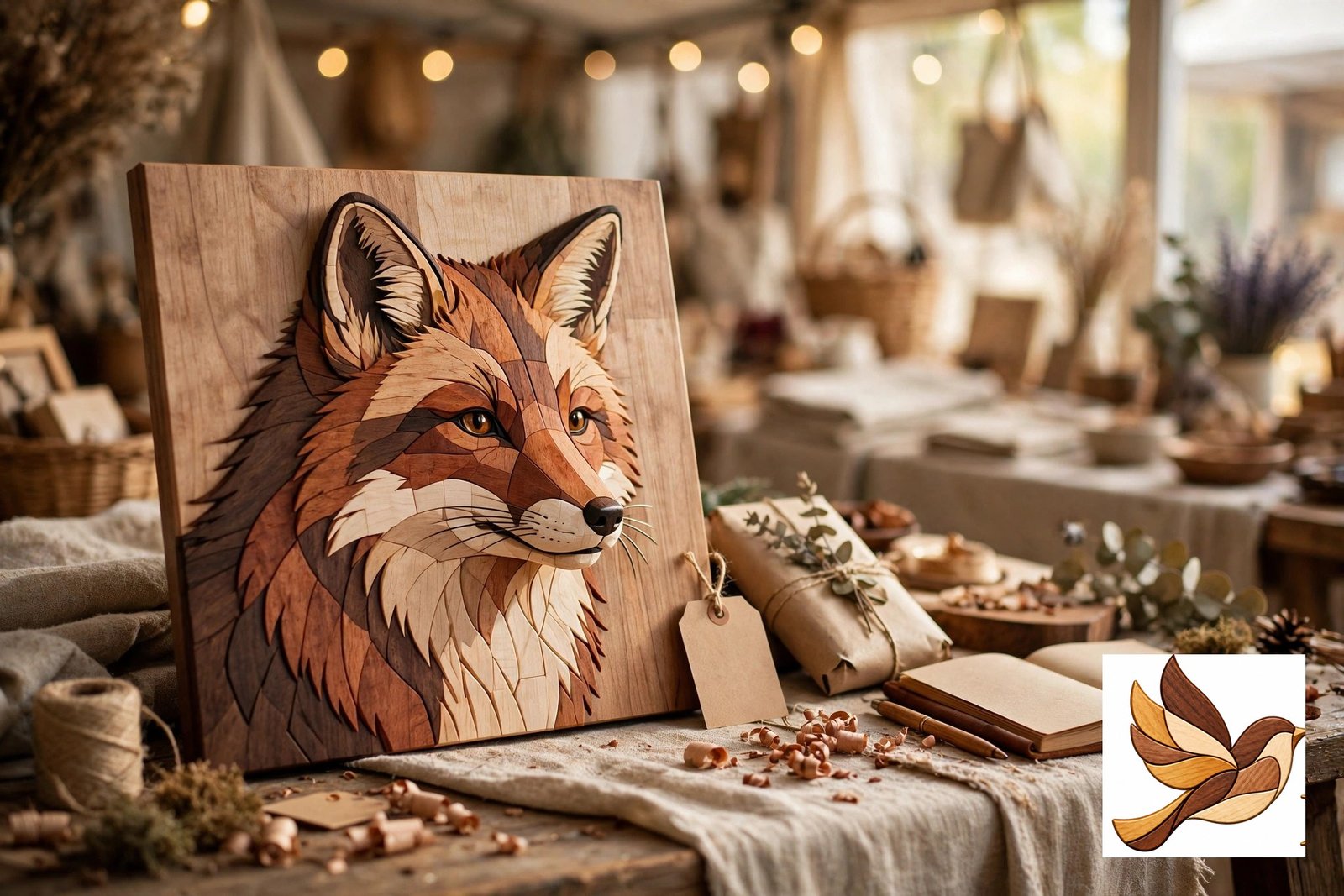
Sooner or later, every intarsia maker hears the same sentence: “You should sell these!” Then comes the hard part — putting an actual number on a piece you spent two weekends cutting, shaping and fitting. Charge too little and you have worked for less than minimum wage. Charge too much and the piece sits on your shelf. Knowing how to price intarsia fairly is a skill, just like cutting a clean line — and like cutting, it follows a method you can learn.
This guide gives you that method: a simple pricing formula, a worked example with real numbers, the mistakes that quietly cost makers money, and honest guidance on what buyers actually pay for. Whether you sell at craft fairs, online, or take commissions from friends and neighbours, the same maths applies. If you have ever wondered how to price intarsia without guessing, this is the practical version.
Why Most Makers Underprice Their Work
Almost every maker makes the same three errors at the start. First, they price by materials alone — “the wood cost me $18, so $40 feels fair” — and give away twenty hours of skilled labour for free. Second, they compare their price with mass-produced wall décor from a discount store, which was made by a machine in minutes, not by a person over two weekends. Third, they feel slightly guilty charging for something they enjoyed making.
Enjoyment is not a discount. A plumber who likes plumbing still charges for the call-out. Your piece is one of one: the colours are the natural colours of real wood species, the grain in your walnut will never repeat in anyone else’s, and no factory on earth sells the same object. Price it like the unique thing it is.
The Simple Formula: How to Price Intarsia Fairly
Use this formula for every piece until knowing how to price intarsia becomes second nature:
Price = Materials + (Hours × Your Hourly Rate) + Overhead + Profit Margin
- Materials: wood, backer board, glue, blades, sandpaper, finish and the hanger. Count what the piece actually consumed, including the offcuts you ruined learning a new cut.
- Hours: honest workshop time — cutting, shaping, fitting, gluing and finishing. Track it on your phone for your next three pieces; most makers are shocked by the real number.
- Your hourly rate: skilled handcraft is not minimum-wage work. A fair starting range is $15–$25 per hour for a competent maker, rising with your reputation and detail level.
- Overhead: electricity, blade wear, tool depreciation, stall fees or marketplace fees and postage materials. A simple 10% on top covers most of it.
- Profit margin: 20–30% if you sell through a shop or gallery that also takes commission, build their cut in here rather than discounting your labour.
A worked example
Say you make a 70-piece animal portrait — roughly the size and complexity of a typical weekend project — and work through how to price intarsia step by step:
- Materials: $22 (wood $14, backer $3, blades/sandpaper/finish $5)
- Time: 11 hours at $18/hour = $198
- Overhead at 10%: $22
- Subtotal: $242 — round to a clean $245
That number shocks most beginners, but it is simply honest maths. A buyer who wants a handmade, one-of-one wooden portrait for less than the cost of a framed factory print is not your customer — and that is fine. The customers who understand handcraft exist in large numbers; your price is how you filter for them.
What Buyers Are Actually Paying For
Understanding value helps you hold your price with confidence, and it is the part of learning how to price intarsia that most guides skip. Buyers pay for four things:
The story. “Made from walnut, cherry and maple — the colours are the natural wood, no paint or stain” is a sentence no factory product can say. Tell it on the tag, in the listing and in person.
The subject. A piece that matches the buyer’s life — their dog’s breed, their father’s fishing hobby, a cardinal for a grandmother — is worth far more to them than a generic design. Personal subjects carry premium prices, which is why gift pieces sell so well; our guide to intarsia Christmas gifts shows how strongly occasion and recipient drive demand.
The finish. Two pieces from the same pattern can sell $80 apart because one was rushed and one was shaped, sanded and oiled properly. The steps in our how to finish intarsia guide are, quite literally, money.
Readiness. A piece that arrives with a hanger fitted, signed and dated on the back, ready to go straight onto a wall, feels like a gallery product. Five minutes of presentation work routinely adds 10–15% to what buyers happily pay.
Rough Price Ranges by Size and Piece Count
Every market differs, but these ranges reflect what handmade intarsia commonly sells for online and at good craft fairs. Use them as a cross-check once you have worked out how to price intarsia for your own piece:
- Small (under 40 pieces, under 25 cm): $45–$95 — ornaments, small animals, first commissions.
- Medium (40–80 pieces, 25–40 cm): $120–$280 — the heart of the market; most portraits and wildlife scenes live here.
- Large (80+ pieces, 40 cm+): $300–$650+ — statement pieces, detailed portraits and multi-figure scenes.
- Pet portrait commissions: add 25–50% on top of the equivalent stock piece — the buyer is purchasing likeness and sentiment, not just wood.
If your formula price lands far below these ranges, your hourly rate is too low. If it lands far above, check your hours — you may be slower than the market assumes, which improves with practice, not with discounting.
5 Pricing Mistakes That Cost Makers Money
1. Pricing before timing yourself. Guessing “about six hours” for a piece that took eleven is the single most expensive habit when you are learning how to price intarsia. Time three pieces honestly before you set any price.
2. Forgetting the small consumables. Blades, sandpaper, glue and finish feel free because they come out of a drawer. Across a year they are hundreds of dollars. The formula counts them — let it.
3. Discounting for friends automatically. Friends who value your work will insist on paying properly. Decide your friends-and-family policy once, write it down, and stop renegotiating it at every kitchen table.
4. Charging the same for every design. A 30-piece ornament and a 130-piece family scene cannot share a pricing logic. Piece count, size and shaping difficulty all move the number.
5. Apologising for the price. State it plainly, with the story attached: hours, woods, one of one. Confidence is part of the product. The history of the craft itself — intarsia has been prized since Renaissance workshops, as the overview of intarsia shows — is on your side: this has never been a cheap art form.
Where to Sell Your Intarsia
Online marketplaces (Etsy and similar) suit stock designs and gift pieces; photograph in natural light and put the wood story in the first two lines of the listing. Craft fairs suit medium pieces — visitors who can touch the shaping buy at higher rates than screen shoppers. Commissions, especially pet portraits and family pieces, pay the best hourly return but need a clear deposit policy: 50% before you cut, the balance on delivery. Local galleries and gift shops take 30–50% commission, so use the margin line of your formula rather than cutting your rate.
Start where your next ten customers already are, not everywhere at once. One channel done well beats four done thinly — and that focus is what makes learning how to price intarsia pay off in real sales.
How to Price Intarsia Commissions Differently from Stock Pieces
Stock pieces — designs you chose, made at your pace, sold when they sell — carry your standard formula price. Commissions are a different product and deserve different maths. When you work out how to price intarsia commissions, you are also selling design time (finding or adapting the right subject, sometimes working from a customer’s photograph), communication time (messages, progress photos, revisions to the wood plan), and certainty: the piece is sold before you cut it, but your bench is committed to one buyer.
Add a commission premium of 25–50% on top of the formula price, take a 50% deposit before the first cut, and agree the design, size and wood palette in writing before work starts. The deposit is not distrust — it covers your materials and reserves your time, and serious buyers expect to pay it. If a commission involves a pet portrait, charge toward the top of the premium range: matching a likeness in natural wood colours is the hardest work in this craft, and buyers know it.
One more rule that saves friendships and businesses alike: quote a single firm price, not a range. “Between $200 and $300” always becomes $200 in the buyer’s mind. Do the formula, state the number, and let the work speak.
Frequently Asked Questions
How much should I charge for my first intarsia piece?
Use the formula with a modest starting rate of $12–$15 per hour — the honest starting point for anyone learning how to price intarsia. Early pieces take longer, so the price stays fair while your speed builds. Never price a first piece by materials alone.
Should I price by piece count or by size?
By time, which piece count and shaping difficulty drive — that is the core of how to price intarsia fairly. A 60-piece piece with heavy contouring takes longer than a flat 90-piece piece. Track hours and let the formula do the work.
Do buyers really pay $200+ for wooden wall art?
Yes — handmade, one-of-one pieces in natural wood routinely sell in the $200–$600 range online and at juried craft fairs. Once you understand how to price intarsia, you will see why: buyers are paying for skilled hours and uniqueness, not for wood.
Price It Like You Made It
Your intarsia took real wood, real hours and a real skill that took you months to build. Now that you know how to price intarsia, price all three, tell the story, and let the right buyers find you. And if you are still building that skill, start with a design at your level: browse our intarsia patterns — every one is an instant PDF download with a numbered map, cutting schedule and full-size templates — or read our Intarsia for Beginners guide if you are planning your very first piece to sell.

zaiduuu
Articles from IntarsiaPattern focus on intarsia woodworking, scroll saw techniques, digital patterns and practical project guidance.


Pingback: How to Sell Intarsia Online: A Maker's Guide